

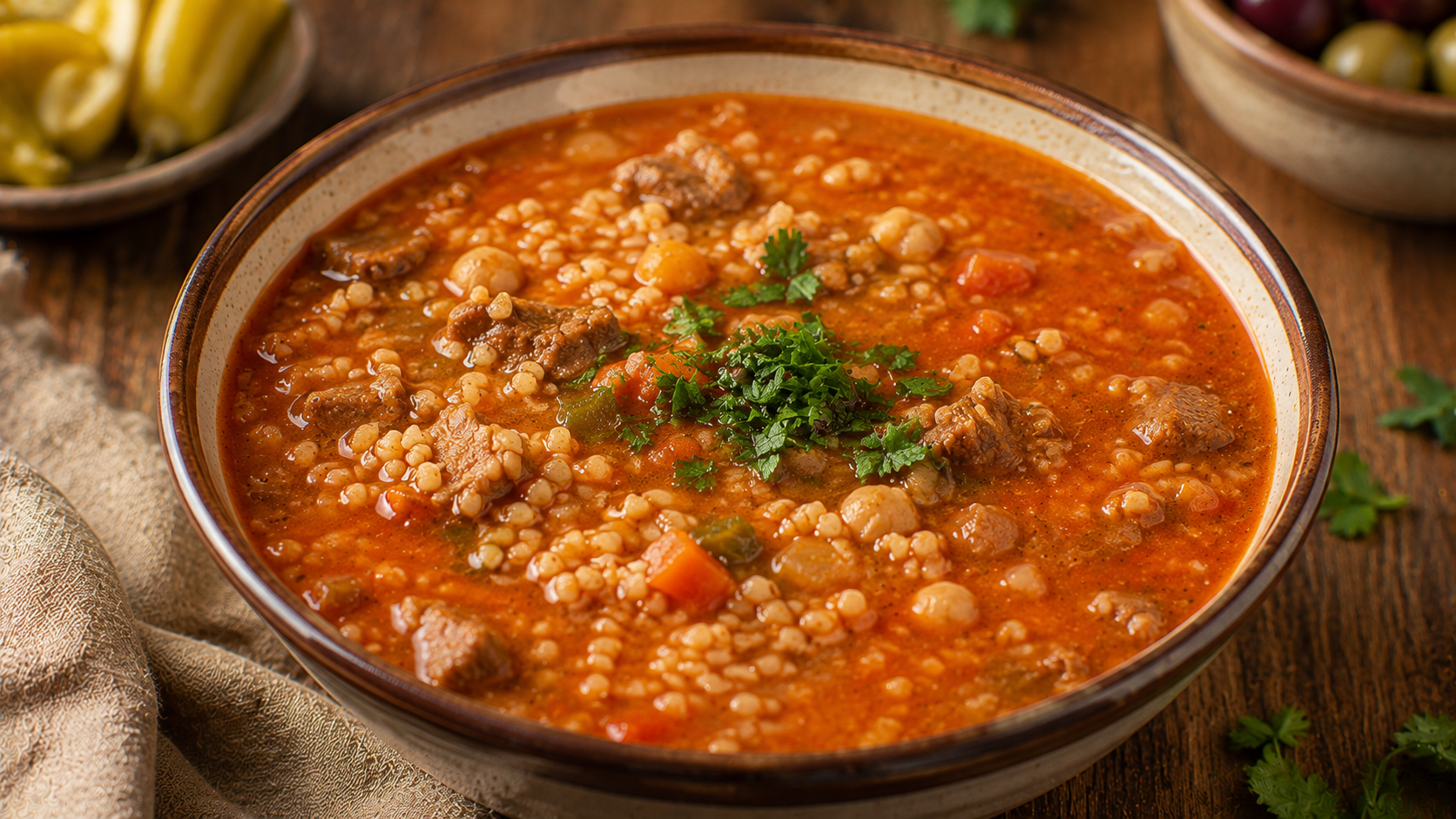
This incredibly hearty, beautifully spiced, and deeply comforting Shorbat frik (Tunisian Freekeh Soup) is the ultimate stovetop savior for anyone looking to bring the warm, aromatic flavors of North African comfort food right into their own kitchen. Whether you are meal-prepping for a demanding week of academic evaluations, curating wholesome, search-engine-optimized culinary content for platforms like Recipevilla, or simply searching for healthy and satisfying global soup recipes to effortlessly elevate your evening rotation, this one-pot marvel hits all the right marks. Packed with tender lamb or beef, roasted green wheat (freekeh), and a vibrant, harissa-infused tomato broth, it delivers massive, soul-warming satisfaction while remaining exceptionally filling, highly nutritious, and remarkably rewarding to assemble.
Origin Shorbat Frik
The culinary history of Shorbat frik is deeply woven into the ancient cultural fabric of Tunisia and the broader Maghreb region. The star of this dish is freekeh (or frik)—an ancient durum wheat that is harvested while the grains are still young and green. Historically, the wheat stalks were piled and roasted over an open fire to burn off the chaff, which infused the grains with an incredibly distinct, smoky flavor. This deeply nourishing, crimson soup is especially revered during the holy month of Ramadan, where it is traditionally served daily at sunset to break the fast, perfectly designed to restore energy, rehydrate the body, and soothe the stomach. Today, modern home cooks celebrate this vibrant classic as a highly functional, nutrient-dense centerpiece that perfectly balances ancient, rustic agrarian traditions with absolute, robust indulgence.
Why I Love This Recipe
I love how this recipe transforms ancient grains and tough cuts of meat into a genuinely spectacular, highly texturized centerpiece with an unmatched depth of flavor. It completely eliminates the flat, one-dimensional profile that often accompanies standard tomato-based stews, relying instead on the nutty, chewy bite of the cracked freekeh and the complex, warming heat of traditional Tunisian spices like caraway, coriander, and fiery harissa. It is one of the absolute best comforting and savory dinner ideas because the long, gentle simmer naturally perfumes your entire home with an incredibly inviting fragrance. You can serve your Shorbat frik classically alongside warm, crusty bread and a wedge of fresh lemon for a beautifully balanced, hearty meal.
Tips for the Perfect Texture
To achieve a flawlessly textured, beautifully clear broth rather than a thick, murky porridge, managing your grain preparation is absolutely critical. First, you must wash and rinse the freekeh thoroughly several times before adding it to the pot. This is an essential expert ancient-grain cooking technique; because freekeh is traditionally fire-roasted, unwashed grains can introduce fine ash and grit into your soup. Furthermore, you must allow the meat to simmer and tenderize before adding the cracked freekeh. Cooking the grain for too long will cause it to completely dissolve and turn your Shorbat frik into a heavy paste. The grain should always retain a pleasant, caviar-like “pop” when chewed.
Also Read : Beef Goulash Soup
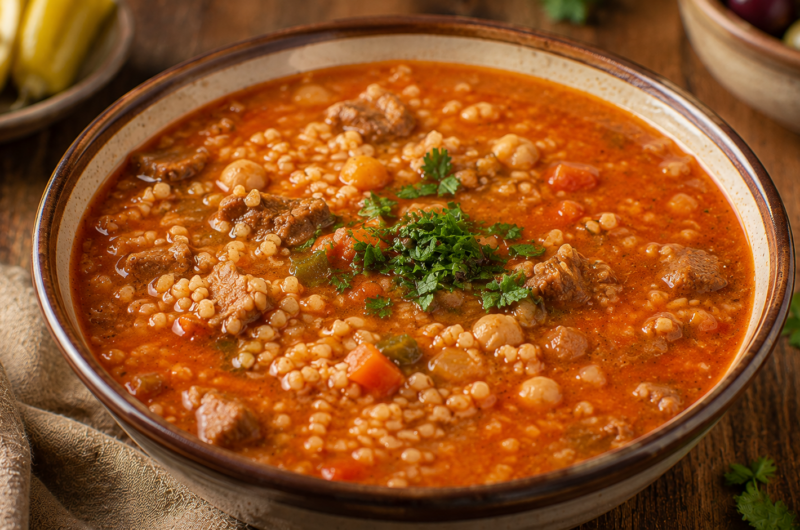
Shorbat Frik (Tunisian Freekeh Soup)
Course: SoupCuisine: North AfricanDifficulty: Medium6
servings15
minutes1
hour15
minutes280
kcalIngredients
½ lb (225g) lamb shoulder or stewing beef, cut into small ½-inch cubes
1 medium yellow onion, finely grated or processed into a paste
3 cloves garlic, minced
3 tbsp olive oil
3 tbsp tomato paste
1 to 2 tbsp Tunisian harissa paste (adjust based on your spice tolerance)
1 tsp ground coriander
½ tsp ground caraway seeds
½ tsp ground turmeric
1 tsp fine sea salt, plus ½ tsp black pepper
1 cup crushed/cracked freekeh (frik), thoroughly rinsed and drained
6 cups (48 oz) hot water or low-sodium beef broth
½ cup cooked chickpeas (optional)
For Garnish: A massive handful of fresh cilantro and parsley (finely chopped) and fresh lemon wedges
Directions
- Sauté the Base: Heat the olive oil in a large Dutch oven or heavy-bottomed soup pot over medium heat. Add the cubed lamb (or beef) and the grated onion. Sauté for 5 to 7 minutes until the meat is lightly browned and the onion softens.
- Bloom the Spices (Crucial Step): Stir in the minced garlic, tomato paste, harissa paste, coriander, caraway, turmeric, salt, and pepper. Cook for 2 to 3 minutes, stirring constantly. Toasting the tomato paste and spices deepens their flavor and removes any raw bitterness.
- Simmer the Meat: Pour in the 6 cups of hot water (or broth) and stir well to dissolve the tomato base. Bring the soup to a gentle boil. Reduce the heat to low, cover the pot, and simmer for 40 to 45 minutes until the meat is completely tender.
- Add the Ancient Grains: Once the meat is tender, stir in the thoroughly rinsed freekeh and the cooked chickpeas (if using).
- Cook the Freekeh: Cover the pot partially and let it simmer for another 25 to 30 minutes, stirring occasionally. The freekeh will swell, soften, and naturally thicken the broth, but it should still retain a slight, chewy bite.
- The Flavor Finish: Remove the pot from the heat. Stir in half of your freshly chopped cilantro and parsley to instantly brighten the deep, earthy flavors.
- Serve: Ladle your stunning, aromatic Shorbat frik into deep bowls. Garnish heavily with the remaining fresh herbs and serve piping hot with a generous squeeze of fresh lemon juice!
Notes
- Vegetarian Option: Skip the meat entirely and use vegetable broth. Add extra chickpeas, diced carrots, and celery to bulk up the vegetable base.
- Finding Freekeh: Cracked green freekeh can typically be found in Middle Eastern or Mediterranean grocers, or easily sourced online. Do not substitute it with standard bulgur wheat, as you will lose the signature smoky flavor.
- Storage: Store leftovers in an airtight container in the refrigerator for up to 4 days. The freekeh will continue to absorb liquid as it sits, so simply whisk in a splash of hot water when reheating on the stovetop.