



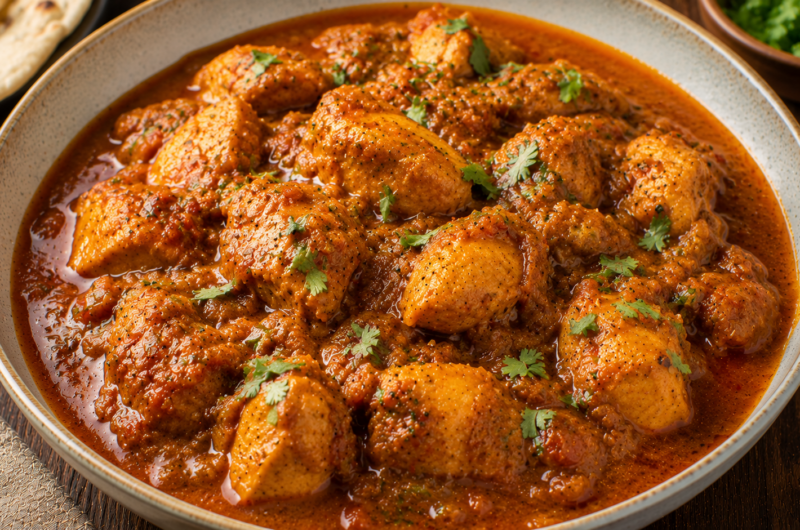
This incredibly vibrant, deeply aromatic, and wonderfully fiery Chicken madras is the ultimate weekend dinnertime savior for anyone looking to bring the robust, heavily spiced flavors of their favorite Indian restaurant right into their own home. Whether you are hosting a festive dinner party, craving authentic comfort food after a long week, or simply searching for healthy Indian dinner recipes to effortlessly elevate your standard poultry rotation, this slow-simmered curry hits all the right marks. Packed with tender chunks of chicken breast, a rich tomato-based gravy, and a complex blend of toasted spices, it delivers massive, restaurant-quality depth while remaining exceptionally budget-friendly, naturally gluten-free, and remarkably easy to assemble in under 45 minutes.
Origin Chicken madras
The culinary tradition of the Madras curry is actually a fascinating fusion of Indian cooking techniques and British colonial influence. The dish derives its name from the city of Madras (now Chennai) in southern India, a region known for its intense heat, vibrant use of chilies, and abundant spices like mustard seeds and curry leaves. However, the specific, heavily sauced Chicken madras that is famous worldwide today was largely developed in British curry houses in the mid-20th century to satisfy customers who wanted something substantially hotter and tangier than a standard tikka masala. Today, recognizing the profound health benefits of anti-inflammatory spices like turmeric and cumin, modern home cooks celebrate this rich, crimson-colored curry as a highly functional, nutrient-dense centerpiece that perfectly balances clean eating with robust, unapologetic heat.
Tips for the Perfect Spice Base
To achieve a flawlessly smooth, deeply flavored gravy rather than a thin, watery sauce with a raw spice taste, managing your aromatics and spice blooming technique is absolutely critical. First, you must take the time to properly soften your onions until they are deeply golden and caramelized before adding your garlic and ginger. This is an essential expert curry-making technique; caramelized onions provide the necessary underlying sweetness and act as the natural thickener for the sauce. Furthermore, when you add your dry ground spices to the hot oil, you must stir them continuously for at least 30 to 60 seconds (a process called blooming) before adding the wet tomatoes. This brief frying process releases the essential oils within the spices, ensuring your Chicken madras achieves that authentic, rich, restaurant-quality aroma.
Also Read : chicken tikka kebab
Chicken madras
Course: DinnerCuisine: British-IndianDifficulty: Medium4
servings15
minutes30
minutes280
kcalIngredients
1.5 lbs (about 700g) boneless, skinless chicken breasts or thighs, cut into bite-sized pieces
2 tbsp vegetable oil or ghee
1 large yellow onion, very finely diced
4 cloves garlic, finely minced
1 tbsp fresh ginger, grated
1 (14 oz) can crushed tomatoes (or tomato purée)
1 cup chicken broth or water
1 tbsp fresh lemon juice
The Spice Blend:
1 tbsp Madras curry powder (or standard curry powder)
1 tsp Kashmiri chili powder (or ½ tsp cayenne pepper for high heat)
1 tsp ground coriander
1 tsp ground cumin
½ tsp ground turmeric
½ tsp garam masala
1 tsp fine sea salt
For Garnish: Fresh cilantro (coriander) leaves, roughly chopped
Directions
- Sauté the Aromatics: Heat the vegetable oil or ghee in a large, heavy-bottomed pot or Dutch oven over medium heat. Add the finely diced onion and sauté for 8 to 10 minutes until deeply golden brown and caramelized.
- Add Ginger and Garlic: Stir in the minced garlic and grated ginger. Cook for 1 to 2 minutes until highly fragrant.
- Bloom the Spices (Crucial Step): Reduce the heat slightly to medium-low. Add the Madras curry powder, chili powder, coriander, cumin, turmeric, and salt. Stir continuously for 30 to 60 seconds. The spices should smell incredibly fragrant and form a thick paste with the onions. (Do not let them burn!)
- Build the Gravy: Immediately pour in the crushed tomatoes and the chicken broth. Stir well, scraping the bottom of the pot to lift up any toasted spices. Bring the mixture to a gentle boil.
- Simmer the Chicken: Add the chopped chicken pieces to the bubbling sauce, stirring to coat them completely. Reduce the heat to low, cover the pot with a tight-fitting lid, and let it simmer gently for 15 to 20 minutes until the chicken is completely cooked through and tender.
- The Flavor Finish: Remove the lid. If the sauce is too thin, let it simmer uncovered for 5 more minutes to reduce and thicken. Turn off the heat. Stir in the garam masala and the fresh lemon juice (the acid brilliantly brightens the heavy spices).
- Serve: Garnish your steaming, vibrant Chicken madras heavily with fresh chopped cilantro. Serve immediately in deep bowls alongside hot basmati rice and warm naan bread!
Notes
- Adjusting the Heat: Madras is traditionally a spicy curry. If you prefer a milder version, use standard curry powder instead of Madras blend and omit the extra chili powder. For intense, tear-inducing heat, double the cayenne pepper!
- Vegetarian Swap: You can easily swap the chicken for a combination of cubed potatoes, cauliflower florets, and chickpeas.
- Storage: Store leftovers in an airtight container in the refrigerator for up to 4 days. Like most curries, the complex spices will continue to meld overnight, making it taste even better the next day!