


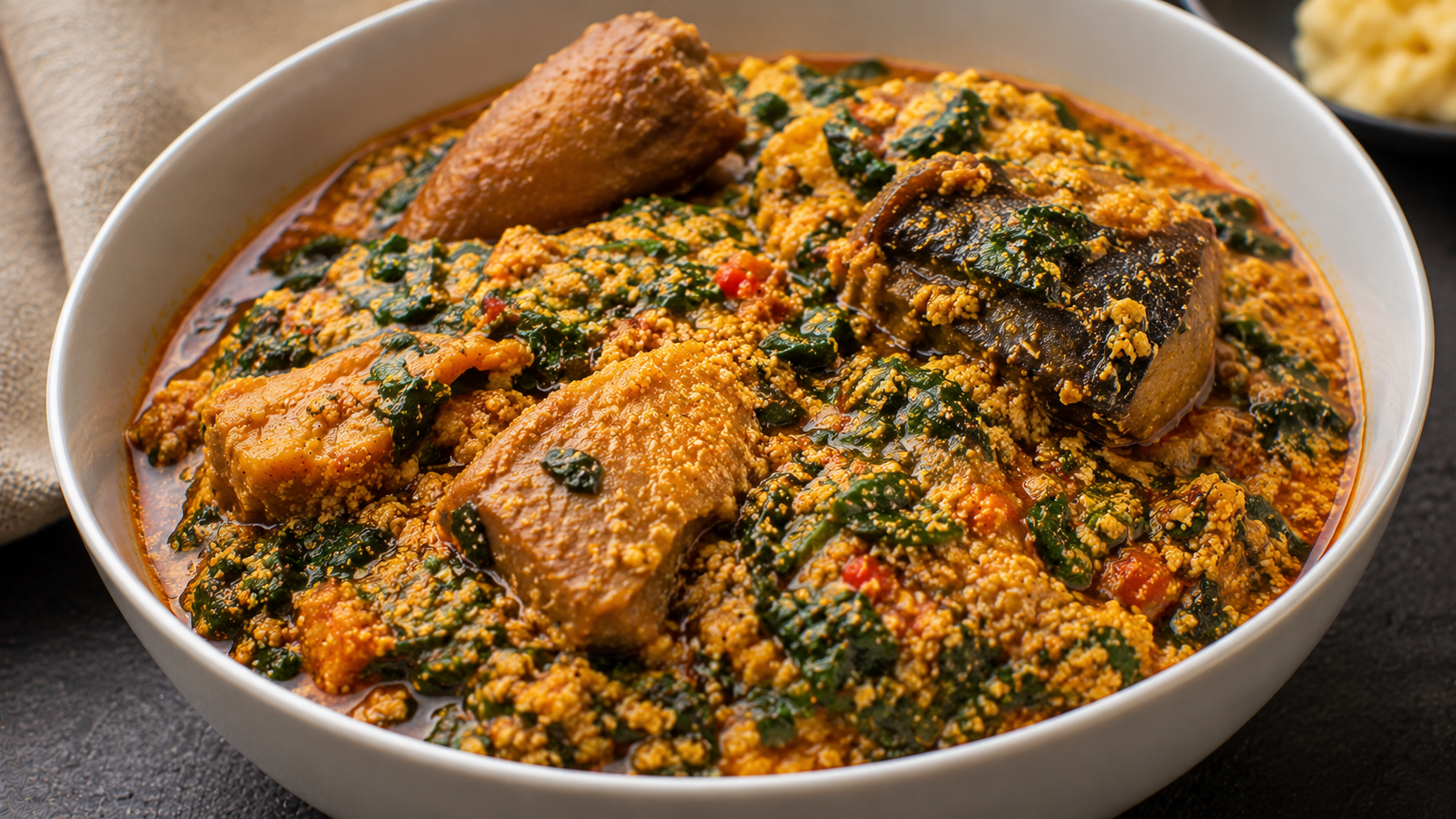
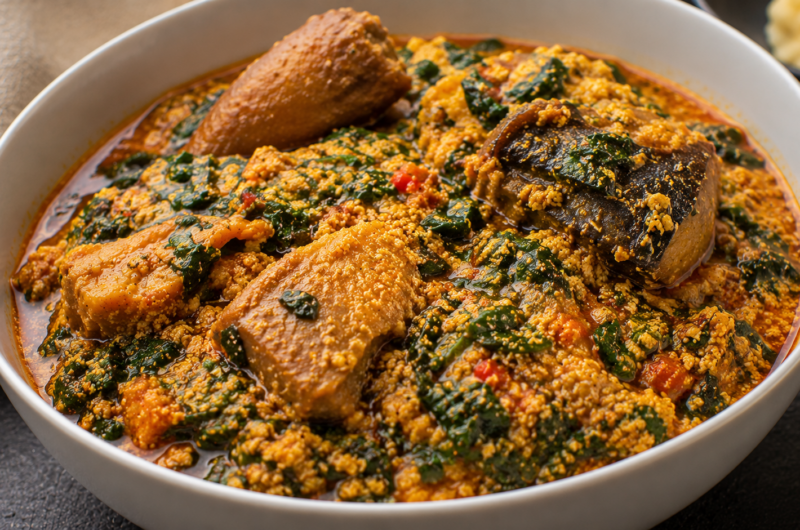
This incredibly rich, beautifully textured, and deeply savory Nigerian Egusi Soup is the ultimate culinary triumph for anyone looking to bring the vibrant, soul-warming flavors of West African home cooking right into their own kitchen. Whether you are meal-prepping for a demanding week, hosting a celebratory family gathering, or simply searching for hearty and comforting global recipes to effortlessly elevate your dinner rotation, this one-pot marvel hits all the right marks. Packed with protein-dense ground melon seeds, an assortment of tender meats, and vibrant leafy greens bathed in earthy red palm oil, it delivers massive, homestyle satisfaction while remaining exceptionally filling, naturally gluten-free, and remarkably rewarding to assemble.
Origin Nigerian Egusi Soup
The culinary history of Egusi Soup is deeply woven into the daily agrarian and cultural fabric of West Africa, most notably within Nigeria across the Igbo, Yoruba, and Hausa communities. The soup derives its name from “egusi,” the protein-rich seeds of a specific species of melon native to the region. Historically, these seeds were harvested, sun-dried, and ground into a fine powder to act as a natural, highly nutritious thickening agent for rich broths and stews. Today, recognizing the profound health benefits of seed-based proteins and nutrient-dense greens, modern home cooks around the world celebrate this deeply golden-orange classic as a highly functional, communal centerpiece that perfectly balances ancient, rustic cooking methods with robust, unapologetic indulgence.
Why I Love This Recipe
I love how this recipe transforms simple ground seeds and assorted proteins into a genuinely spectacular, highly texturized centerpiece with an unmatched depth of flavor. It completely eliminates the flat, one-dimensional profile that often accompanies standard meat stews, relying instead on the intense, savory umami of ground crayfish and the distinct, earthy richness of unrefined red palm oil to beautifully satisfy your appetite. It is one of the absolute best comforting and celebratory dinner ideas because the slow simmer naturally perfumes your entire home with an incredibly inviting, savory fragrance. You can serve your Nigerian Egusi Soup classically alongside warm, stretchy swallows like Pounded Yam, Eba, or Fufu, or ladle it over a massive bed of fluffy white rice for a beautifully balanced, hearty meal.
Tips for the Perfect Texture
To achieve flawlessly curdled, beautifully textured melon seeds rather than a watery, flat broth, managing your egusi preparation and frying technique is absolutely critical. First, you must mix the dry ground egusi with a small amount of blended onion and water to form a thick, cohesive paste before adding it to the pot. This is an essential expert soup-thickening technique; dropping dry powder directly into the broth will cause it to dissolve entirely. Furthermore, for the popular “caking” or curdling effect, you must fry this paste in the hot palm oil for about 10 minutes before adding your meat stock, allowing it to toast and form those signature, sponge-like lumps that soak up all the incredible savory flavors of your Nigerian Egusi Soup.
Also Read : Soup Maker Lentil Soup
Nigerian Egusi Soup
Course: SoupCuisine: West AfricanDifficulty: Medium8
servings20
minutes1
hour15
minutes425
kcalIngredients
For the Base & Meats:
2 lbs (about 1 kg) assorted meats (beef, goat meat, and/or tripe), cut into bite-sized pieces
1 medium yellow onion, roughly chopped
2 stock cubes (Maggi or Knorr)
1 tsp fine sea salt
For the Egusi Paste:
2 cups ground egusi (melon seeds)
½ medium red onion, blended with a splash of water
For the Soup:
¾ cup unrefined red palm oil
2 large red bell peppers, 1 medium onion, and 2 Scotch bonnet peppers (blended together into a coarse pepper mix)
½ cup ground dried crayfish
1 cup dried fish or smoked fish, soaked and deboned
3 cups fresh leafy greens, washed and finely chopped (spinach, pumpkin leaves/ugu, or bitter leaf)
Directions
- Cook the Meat: Place the assorted meats, roughly chopped onion, stock cubes, and salt into a large, heavy-bottomed pot. Add enough water to just cover the meat. Bring to a boil, then reduce the heat and simmer for 40 to 50 minutes until the meats are completely tender. Separate the meat from the rich stock and reserve both.
- Form the Egusi Paste (Crucial Step): In a medium bowl, combine the ground egusi seeds with the blended half-onion. Mix thoroughly with a spoon until it forms a thick, moldable paste. Set aside.
- Fry the Palm Oil: In a separate large, dry pot, heat the red palm oil over medium heat for about 2 minutes. (Do not bleach the oil; it should remain bright orange).
- Fry the Egusi: Drop small spoonfuls of the egusi paste into the hot palm oil. Let it fry undisturbed for 2 to 3 minutes to form curds, then stir gently. Continue frying and stirring frequently for about 10 minutes until the egusi looks crumbly and smells deeply toasted.
- Build the Soup: Pour the blended pepper mix into the fried egusi. Stir well and cook for 5 minutes.
- Add the Stock and Proteins: Gradually pour in 2 to 3 cups of your reserved meat stock. Stir in the ground crayfish, the cooked meats, and the deboned dried fish. Bring the mixture to a gentle boil, then reduce the heat, cover, and let it simmer for 15 minutes so the flavors marry perfectly.
- Add the Greens: Turn the heat to low. Fold in the chopped spinach (or your preferred leafy green). Let it simmer for exactly 3 to 5 minutes until the greens are brightly colored and perfectly wilted.
- Serve: Remove from the heat. Ladle your stunning, aromatic Nigerian Egusi Soup into deep bowls and serve immediately with warm Pounded Yam or Fufu!
Notes
- Leafy Green Substitutions: If you cannot find traditional Nigerian pumpkin leaves (ugu) or bitter leaf, standard fresh spinach or hearty kale makes a spectacular, easily accessible substitute.
- Spice Level: Scotch bonnet peppers are incredibly hot. If you prefer a milder soup, substitute them with habaneros and remove the seeds, or simply omit them entirely.
- Storage: Store leftovers in an airtight container in the refrigerator for up to 5 days. Egusi soup freezes exceptionally well for up to 3 months!