



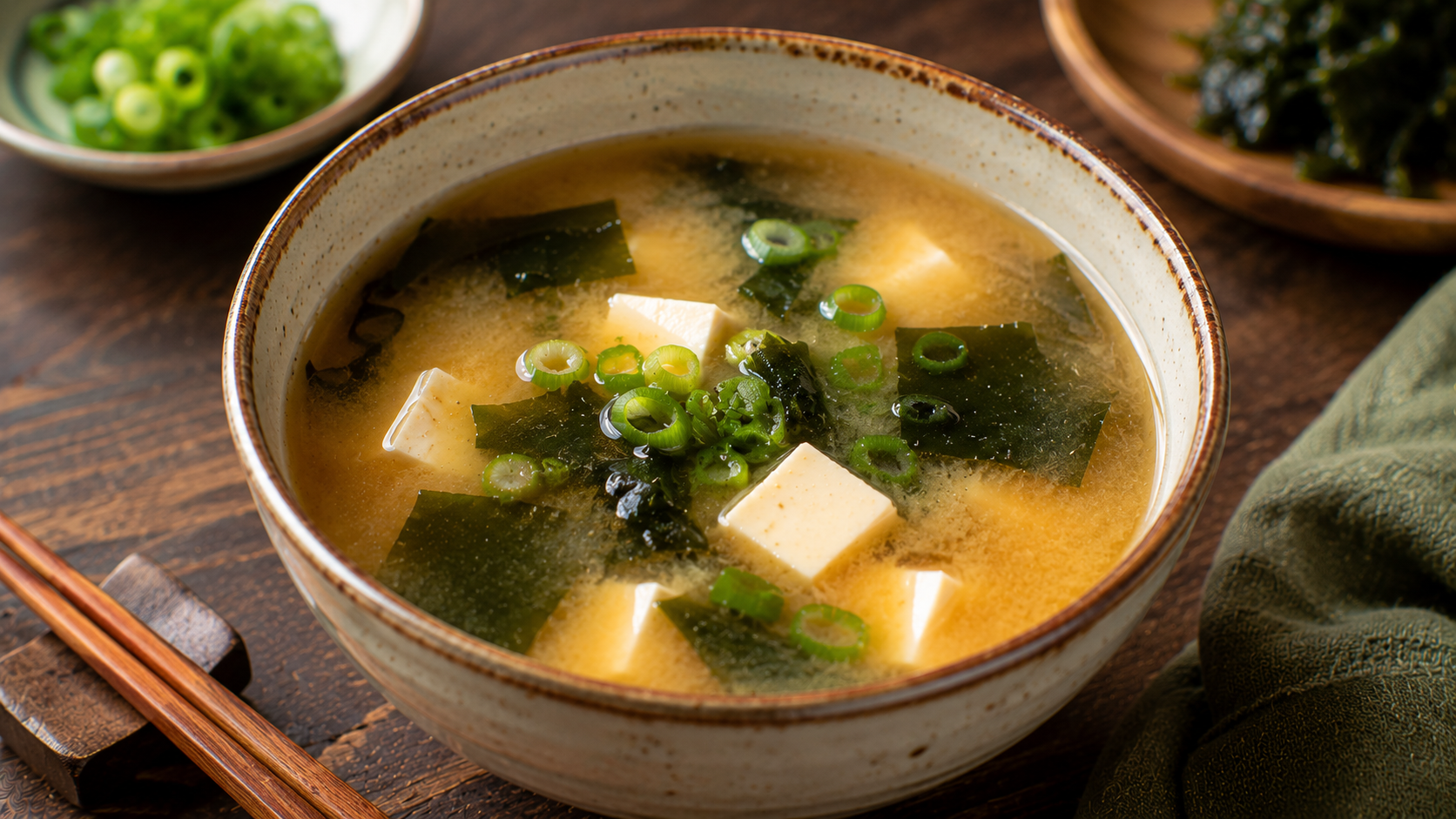
This incredibly savory, beautifully cloudy, and deeply restorative Miso Soup is the ultimate stovetop savior for anyone looking to bring the warm, umami-rich flavors of authentic Japanese comfort food right into their own kitchen. Whether you are fueling up for a demanding week of developing multi-agent AI architectures and C++ evaluations, curating wholesome, search-engine-optimized culinary content for platforms like Recipevilla, or simply designing the perfect, high-intent Pinterest pin to grow your digital reach, this one-pot marvel hits all the right marks. Packed with probiotic-rich fermented soybean paste, tender cubes of silken tofu, and vibrant scallions, it delivers massive, soul-warming satisfaction while remaining exceptionally budget-friendly, naturally vegan, and remarkably easy to assemble. It perfectly satisfies anyone searching for healthy and satisfying soup recipes to effortlessly elevate their evening rotation in under 15 minutes.
Origin Miso Soup
The culinary history of Miso Soup (misoshiru) is deeply woven into the agrarian and spiritual traditions of Japan. Historically, miso paste—created by fermenting soybeans with salt and koji (a beneficial fungus)—was a prized commodity in feudal Japan, utilized by samurai warriors for its incredible shelf life and dense nutritional profile. By whisking this robust paste into a delicate dashi broth, early cooks created a highly functional, easily digestible staple that provided sustained energy and profound gut health. Today, recognizing the profound health benefits of fermented foods and probiotics, modern home cooks celebrate this deeply comforting classic as a nutrient-dense centerpiece that perfectly balances ancient, rustic brewing methods with absolute, unapologetic modern nutrition.
Why I Love This Recipe
I love how this recipe transforms the most basic, minimalist pantry staples into a genuinely spectacular, highly texturized centerpiece with practically zero complicated prep. It completely eliminates the sluggish, heavy feeling that often accompanies thick, flour-based winter soups, relying instead on the intense, savory umami drawn directly from the miso and the delicate bite of rehydrated wakame seaweed. It is one of the absolute best quick and comforting healthy dinner ideas because the gentle steeping process naturally perfumes your entire home with an incredibly inviting, earthy fragrance. You can serve your Miso Soup classically as a light, standalone appetizer, or pair it with steamed rice and grilled fish for a beautifully balanced, hearty meal.
Tips for the Perfect Broth
To achieve a flawlessly layered, intensely aromatic broth rather than a flat, bitter liquid, managing your miso paste is absolutely critical. First, you must never boil the soup once you add the miso paste. This is a non-negotiable expert soup-making technique; aggressive boiling instantly kills the beneficial probiotics in the fermented paste and severely diminishes its delicate, complex flavor profile. Furthermore, you should never dump cold miso paste directly into the main pot. Always ladle a small amount of hot broth into a separate bowl, whisk the miso paste into it until completely smooth, and then gently stir that concentrated slurry back into your Miso Soup off the heat.
Also Read : Finnish Salmon Soup
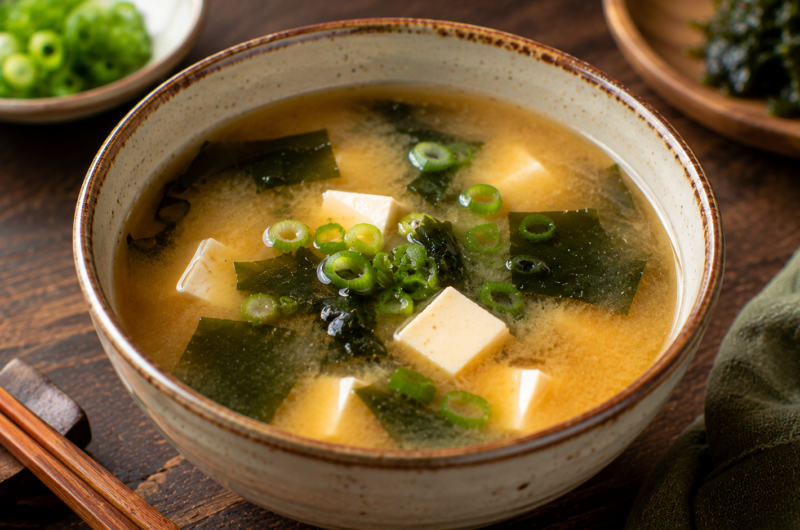
Miso Soup
Course: SoupCuisine: JapaneseDifficulty: Easy4
servings5
minutes10
minutes65
kcalIngredients
4 cups (32 oz) Dashi stock (kombu and bonito flake stock, or vegan kombu dashi)
3 to 4 tbsp Miso paste (white/shiro miso for a sweeter, milder flavor; red/aka miso for a deeper, robust flavor)
1 tbsp dried wakame seaweed
½ block (about 7 oz) silken or firm tofu, drained and cut into tiny ½-inch cubes
2 scallions (green onions), very thinly sliced
Directions
- Hydrate the Seaweed: Place the dried wakame seaweed in a small bowl and cover it with cold water. Let it soak for 5 minutes until fully rehydrated and expanded. Drain well and set aside.
- Heat the Broth: In a medium saucepan, bring the 4 cups of dashi stock to a gentle simmer over medium-high heat.
- Simmer the Tofu and Wakame: Reduce the heat to medium-low. Gently slide the tiny tofu cubes and the rehydrated wakame into the simmering dashi. Let them cook for 2 to 3 minutes just to heat through.
- Create the Slurry (Crucial Step): Turn the heat down to the absolute lowest setting. Ladle about ½ cup of the hot broth from the pot into a small bowl. Add the 3 to 4 tablespoons of miso paste to the bowl. Use a small whisk or a fork to mix vigorously until the miso is completely dissolved and smooth, with no lumps remaining.
- Combine and Warm: Pour the smooth miso slurry back into the saucepan. Stir gently to incorporate it into the soup. Allow the soup to warm through for 1 to 2 minutes, but do not let it come to a boil.
- Garnish and Serve: Remove the saucepan from the heat immediately. Ladle your stunning, aromatic Miso Soup into warm, deep bowls. Garnish generously with the thinly sliced scallions and serve immediately!
Notes
- Vegan Dashi Alternative: If you cannot find traditional dashi (which contains fish), you can easily make a vegan version by soaking dried kombu (kelp) and dried shiitake mushrooms in cold water overnight.
- Storage: Miso soup is always best enjoyed fresh immediately after cooking. If you must store leftovers, keep them in an airtight container in the refrigerator for up to 2 days, and reheat very gently on the stovetop without boiling.
- Vegetable Additions: For a heartier meal, drop in some thinly sliced daikon radish, fresh spinach leaves, or sliced shiitake mushrooms during step 3.