


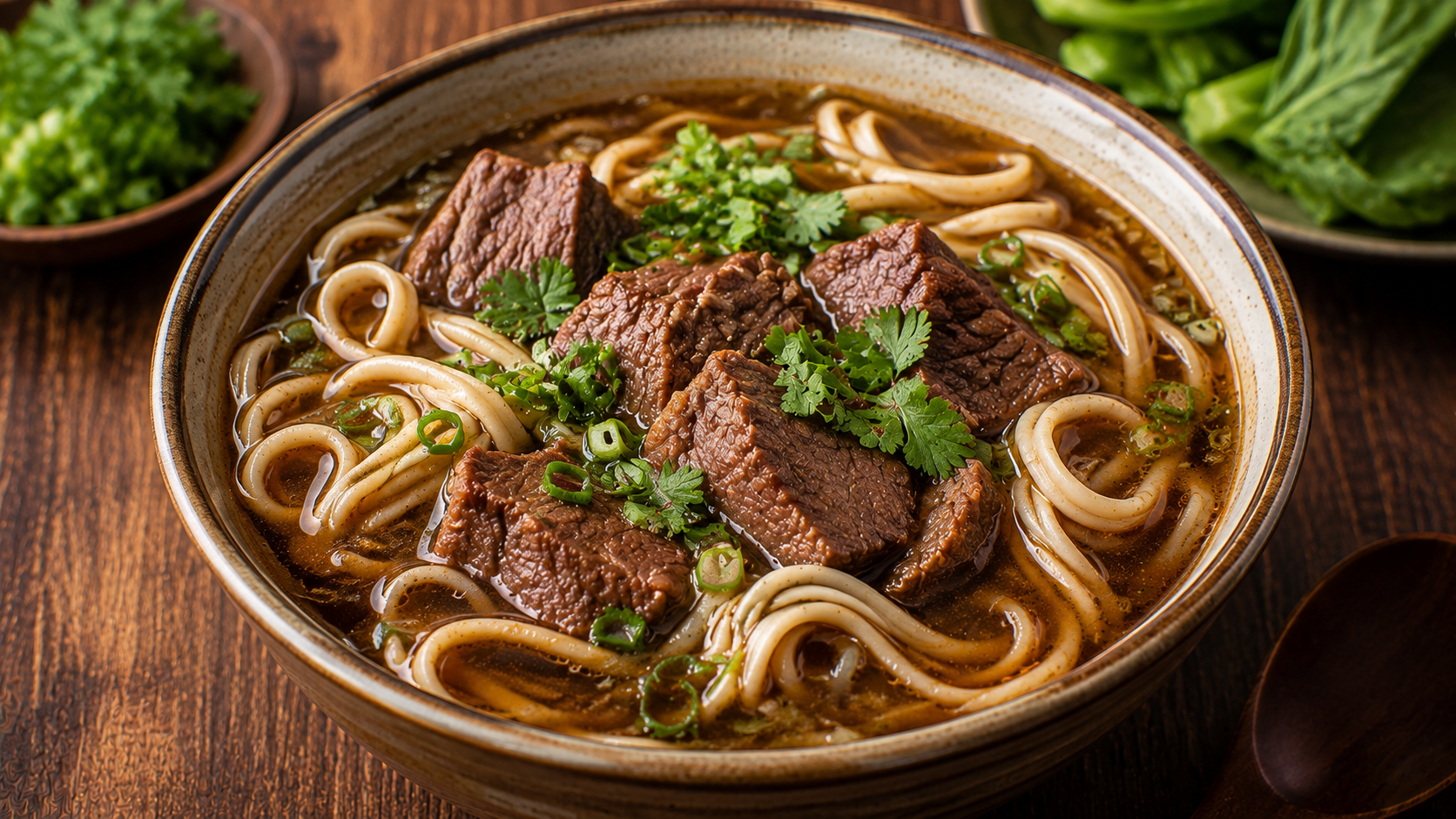
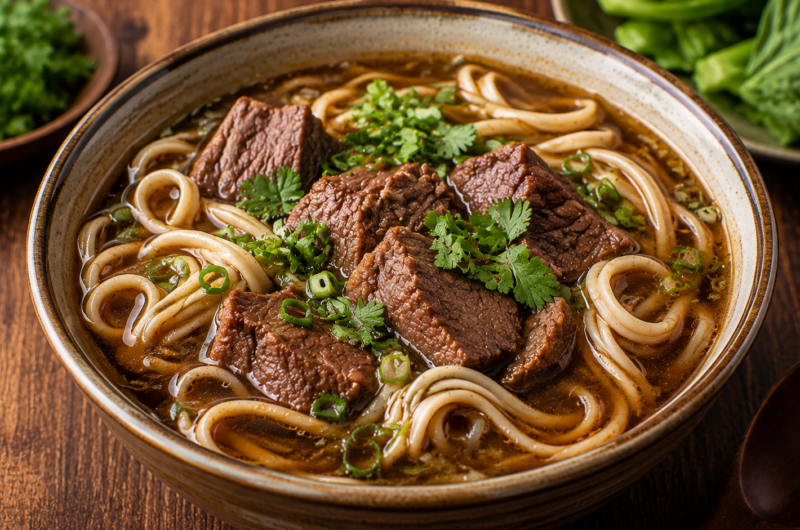
This incredibly savory, beautifully rich, and deeply comforting Beef noodle soup is the ultimate stovetop savior for anyone looking to bring the restorative, aromatic flavors of traditional Asian street food right into their own kitchen. Whether you are meal-prepping to fuel a demanding week of developing FastAPI and Flutter applications, curating wholesome, search-engine-optimized culinary content for platforms like Recipevilla, or simply searching for hearty and satisfying soup recipes to effortlessly elevate your evening rotation, this one-pot marvel hits all the right marks. Packed with melt-in-your-mouth braised beef, slippery wheat noodles, and a profoundly spiced broth infused with star anise and dark soy sauce, it delivers massive, soul-warming satisfaction while remaining exceptionally filling and remarkably rewarding to assemble.
Origin Beef Noodle Soup
The culinary history of Taiwanese Beef noodle soup (Niú Ròu Miàn) is deeply woven into the vibrant, bustling street food culture of Taipei. Born from the fusion of indigenous Taiwanese ingredients and the rich culinary traditions brought over by Sichuanese immigrants in the mid-20th century, this dish represents a brilliant cultural harmony. Historically, the masterful slow-braising of tough, inexpensive cuts of beef shank in a dark, salty-sweet broth made of fermented bean paste and warm spices created a deeply restorative meal for the working class. Today, modern home cooks celebrate this deeply mahogany-hued classic as a highly functional, nutrient-dense centerpiece that perfectly balances traditional, rustic braising methods with absolute, unapologetic indulgence.
Why I Love This Recipe
I love how this recipe transforms tough, affordable cuts of beef and simple pantry spices into a genuinely spectacular, highly texturized centerpiece with an unmatched depth of flavor. It completely eliminates the flat, one-dimensional profile that often accompanies standard beef stews, relying instead on the intense, savory umami of spicy bean paste (doubanjiang) and the aromatic bite of fresh ginger to beautifully satisfy your appetite. It is one of the absolute best comforting and savory dinner ideas because the long, gentle simmer naturally perfumes your entire home with an incredibly inviting fragrance. You can serve your Beef noodle soup classically alongside vibrant, blanched bok choy and a massive handful of fresh scallions for a beautifully balanced, hearty meal.
Tips for the Perfect Broth
To achieve a flawlessly clear, intensely aromatic broth rather than a cloudy, murky liquid, managing your beef preparation is absolutely critical. First, you must blanch the raw beef in boiling water for 5 minutes before you begin the actual soup. This is an essential expert soup-making technique; boiling the meat briefly purges it of blood and impurities, which will otherwise float to the top and completely ruin the beautiful, clean finish of your broth. Furthermore, you must cook the noodles in a completely separate pot of boiling water. Boiling the starchy noodles directly in your hard-earned beef broth will thicken it into an unappetizing gravy, ruining the signature slurpability of your Beef noodle soup.
Also Read : Nigerian Egusi Soup
Beef Noodle Soup
Course: SoupCuisine: AsianDifficulty: Medium5
servings22
minutes2
hours389
kcalIngredients
For the Beef & Broth:
1.5 lbs (700g) beef shank or beef chuck, cut into 1.5-inch chunks
2 tbsp neutral cooking oil
1-inch piece of fresh ginger, thickly sliced
4 cloves garlic, smashed
3 scallions, cut into 2-inch pieces (white and pale green parts)
2 tbsp spicy bean paste (Doubanjiang)
¼ cup dark soy sauce
2 tbsp light soy sauce
2 tbsp rice wine (Shaoxing wine)
1 tbsp rock sugar or brown sugar
2 whole star anise pods
1 cinnamon stick
6 cups (48 oz) water or low-sodium beef broth
For the Bowls:
12 oz (340g) dried Asian wheat noodles or thick fresh noodles
2 cups fresh baby bok choy, halved and blanched
For Garnish: Fresh chopped scallions (green parts) and fresh cilantro
Directions
- Blanch the Beef (Crucial Step): Bring a medium pot of water to a boil. Add the beef chunks and boil for 3 to 5 minutes to release impurities. Drain the beef, rinse it under cold water, and discard the murky boiling water.
- Sauté the Aromatics: In a large Dutch oven or heavy-bottomed soup pot, heat the neutral oil over medium heat. Add the ginger, garlic, and scallion pieces. Sauté for 2 to 3 minutes until highly fragrant.
- Fry the Paste: Stir in the spicy bean paste (Doubanjiang) and the rock sugar. Cook for 1 to 2 minutes, stirring constantly, until the oil turns red and the sugar begins to melt.
- Build the Broth: Add the blanched beef chunks back into the pot. Pour in the dark soy sauce, light soy sauce, and rice wine, tossing the meat to coat it evenly. Drop in the star anise and cinnamon stick.
- Simmer the Meat: Pour in the 6 cups of water (or broth). Bring the liquid to a rolling boil, then immediately reduce the heat to the lowest setting. Cover the pot and let it simmer gently for 2 hours, or until the beef is incredibly tender and yields easily to a fork.
- Cook the Noodles: During the last 10 minutes of simmering, bring a separate pot of water to a boil. Cook your noodles according to the package instructions. Drain well.
- Assemble the Bowls: Divide the cooked noodles and the blanched bok choy evenly among deep serving bowls. Ladle the piping hot, deeply spiced broth and tender beef chunks directly over the noodles.
- Garnish and Serve: Top generously with fresh cilantro and chopped scallions. Serve your stunning Beef noodle soup immediately while piping hot!
Notes
- Spice Adjustments: If you are sensitive to heat, you can substitute regular (non-spicy) bean paste for the Doubanjiang, or simply reduce the amount to 1 tablespoon.
- Make-Ahead Magic: Like most stews, the broth tastes significantly better the next day after the spices have fully melded. Store the broth and beef in the fridge for up to 4 days, but always boil fresh noodles when ready to serve.
- Finding Ingredients: Doubanjiang and Shaoxing wine are essential for the authentic flavor profile and can easily be found in most Asian supermarkets or ordered online.